
The New Retail Reality in the GCC
From Malls to Mobile Screens
Retail in the GCC is evolving faster than ever. What used to be a mall-first experience is now an omnichannel journey where customers move from social media to search engines to online stores before they even think about visiting a physical shop. A single customer might discover your brand through an influencer on Instagram, compare prices via Google, and then complete the purchase on your website or marketplace app.
With this shift, expectations have changed. Shoppers want to see live stock availability, not vague “in stock” labels that turn out to be wrong. They expect fast, reliable delivery and clear communication from order confirmation to doorstep. They also want returns and refunds to be as smooth as the purchase itself. In other words, they are no longer judging individual channels, they are judging the entire experience of your brand.
The Problem with “Disconnected” Online Stores
To keep up, many retailers in the GCC rushed to launch standalone eCommerce sites. While that was an important first step in their digital transformation, a critical mistake was leaving these sites disconnected from their ERP systems. The website became a separate island of information where stock, prices, and orders had to be updated manually.
This disconnection creates visible cracks in the customer experience and hidden headaches in the back office. Inventory shown online may not match reality in the warehouse. Staff re-type online orders into the ERP, creating delays and errors. Finance teams then struggle to reconcile payment gateway reports with ERP invoices. Over time, what was meant to be a growth engine becomes a source of constant friction.
What Is ERP-Integrated eCommerce?
ERP and eCommerce in Simple Language
Your ERP (Enterprise Resource Planning) system is the operational backbone of your business. It manages stock levels, purchase orders, sales invoices, suppliers, branches, and financial reporting. It is where you go to understand what you have, what you sold, and what you owe.
Your eCommerce platform is your digital storefront. It is where customers browse products, check prices, place orders, and make payments. It is the public face of your brand in the digital world. On its own, it can look beautiful and convert reasonably well, but if it is not connected to the ERP, it is always at risk of being out of sync with your actual operations.
Integration – One Source of Truth
ERP-integrated eCommerce connects these two worlds so they behave like one system instead of two. Product details, prices, stock levels, customer information, orders, and invoices flow automatically between ERP and online store. When an order is placed, it is instantly reflected in your ERP. When stock arrives in a warehouse, the website updates without anyone manually editing a spreadsheet or CMS.
This integration creates a single source of truth for inventory, orders, and finance. It removes the need for double entry, reduces errors, and ensures that every department, from sales and warehouse to finance and management, is working from the same real-time data.
The Pain of Running eCommerce Without ERP Integration

Manual Inventory Updates and Stock Errors
In a non-integrated setup, your team often updates website stock manually at the end of the day or week. In fast-moving retail, this is a recipe for trouble. Popular items can sell out in-store while still showing as available online, leading to overselling and awkward apology calls. On the flip side, stock that is actually available might remain marked as “out of stock” online because nobody had time to update it, causing lost sales you never even see.
Broken Order Management Experience
When orders from the online store are not automatically pushed into the ERP, someone has to key them in by hand or export and import files. As your volume grows, this process becomes slower and more error-prone. Quantities are mistyped, addresses are incomplete, and shipments get delayed. Customers end up calling your support team just to ask where their order is, and your staff waste time hunting down information across systems instead of delivering a great experience.
Finance and Reconciliation Nightmares
For the finance team, disconnected systems are a recurring headache. Payment gateways, refunds, discounts, and shipping charges are tracked in one place, while official invoices and ledgers sit in the ERP. To close the books each month, accountants must reconcile online sales reports, bank statements, and ERP records manually. This massively increases the risk of errors in revenue recognition and tax reporting, and makes monthly and quarterly closing more stressful and time-consuming than it needs to be.
Key Benefits of ERP-Integrated eCommerce for Retailers

Real-Time, Accurate Inventory Across All Channels
With ERP-integrated eCommerce, inventory is updated in real time whenever a sale is made online or in-store, or when new stock arrives in the warehouse. The website and physical branches share the same live numbers. This drastically reduces stock-out situations and over-selling. Customers learn that when your site says an item is available, it really is, which builds trust and encourages repeat purchases. Retailers also avoid tying up cash in unnecessary safety stock because they can rely on accurate, up-to-the-minute visibility.
Seamless Order Flow from Website to Warehouse
In an integrated setup, every online order automatically becomes an order inside the ERP. Warehouse teams receive clear picking instructions without anyone retyping order details. The pick, pack, and ship process starts immediately, and order status updates can be fed back to the customer through the eCommerce platform. This results in faster fulfilment, fewer mistakes in quantities or delivery addresses, and far better transparency for both staff and customers.
Clean Financial Data and Faster Reconciliation
When sales, taxes, discounts, and refunds are all pushed directly into the ERP, the finance team finally gets the unified ledger they need. Online and offline channels contribute to the same financial picture. It becomes easier to produce accurate reports, track cashflow, and satisfy auditors. Closing the books at month-end stops being a messy puzzle and becomes a straightforward process backed by consistent data across systems.
Consistent Pricing and Promotions Everywhere
ERP-integrated eCommerce also ensures that prices and promotions are consistent across channels. Instead of updating discounts in both the ERP and the eCommerce platform separately, you set them once in the ERP and let them sync online. This reduces the risk of customers finding different prices on your website and in your stores, or seeing expired promotions still active online. That consistency protects your brand reputation and prevents unnecessary disputes at the checkout.
How Integration Drives Growth and Efficiency
More Sales with Less Operational Overhead
By automating data flows between systems, you free your team from low-value manual tasks. Staff no longer spend hours updating quantities, copying orders, or fixing errors. Instead, they can focus on enhancing the customer experience, optimising product ranges, running targeted marketing campaigns, and planning expansion into new markets. The result is a business that can grow digital sales without increasing internal chaos.
Better Decision-Making with Centralized Data
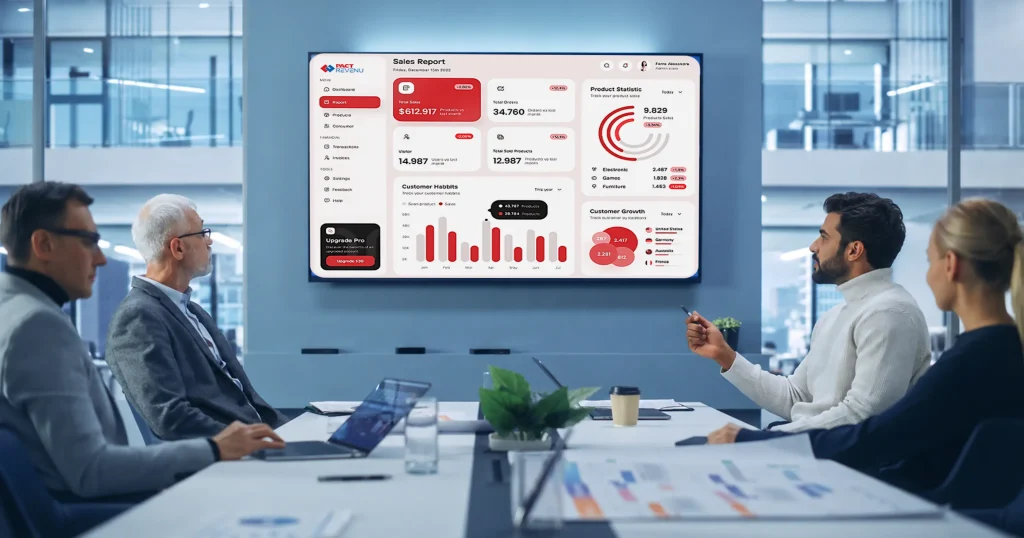
ERP-integrated eCommerce also transforms how you make decisions. With inventory, orders, and financial data in sync, management can access dashboards that show total sales across channels, best-selling products, and profitability by category or region. This centralized view helps you decide which products to stock more, where to open or close branches, which marketing campaigns deserve more budget, and which channels are delivering the highest lifetime value.
Practical Use Cases for ERP-Integrated eCommerce

Multi-Branch Retailer in the GCC
Consider a retailer with several physical branches across the GCC and one central online store. Without integration, each branch might maintain its own stock records, and the website is updated manually once a day. After ERP-integrated eCommerce is implemented, a central ERP manages stock for all locations. The online store always reflects per-warehouse or per-branch availability, and customers can choose delivery from the nearest branch or click-and-collect options. This not only provides a better customer experience but also helps you use your store network as a distributed fulfilment system.
Wholesale Distributor Going Direct-to-Consumer
Now think about a wholesale distributor that has traditionally served B2B clients but wants to launch a B2C eCommerce channel. With ERP-integrated eCommerce, B2B and B2C orders share a single inventory pool. Different pricing tiers for wholesale and retail customers are managed inside the ERP, while the online store presents the right price to each type of customer. The finance team handles both business models in one system, maintaining clarity and control even as the company explores new revenue streams.
What to Look for in an ERP-Integrated eCommerce Solution
When choosing an ERP-integrated eCommerce solution, it is important to evaluate both technical and business aspects. On the technical side, look for robust connectors or APIs between the ERP and eCommerce platform, real-time or near real-time synchronization, and infrastructure that can scale with increasing traffic and transaction volumes. You want a solution that supports modern unified commerce practices, not a fragile custom script that breaks every time you update software.
On the business side, the solution must handle local GCC requirements such as multiple currencies, VAT rules, and popular payment methods including local gateways and cash-on-delivery where relevant. It should also cope comfortably with seasonal peaks during Ramadan, Eid, and holiday periods, as well as support future expansion into new countries or channels. The goal is to have a platform that grows with you instead of holding you back.
Moving to ERP-Integrated eCommerce
The best way to move to ERP-integrated eCommerce is through a clear, phased roadmap. Start by assessing your current systems and identifying the biggest gaps. Ask whether your ERP is being used effectively, whether your eCommerce platform is integration-ready, and which manual processes are causing the most pain. This gives you a realistic picture of where you are and what needs to change first.
Next, select the right technology stack. In some cases, your existing ERP will be sufficient and just needs the right connector. In others, you may decide to upgrade to an ERP and eCommerce combination designed to work well together from the start. Once the stack is chosen, invest time in cleaning product and customer data in the ERP, mapping fields between systems, and testing end-to-end flows such as inventory sync, order creation, and payment capture.
Finally, plan a controlled go-live with strong support and training. Educate sales, warehouse, customer service, and finance teams on how the new process works. Monitor the first weeks closely so any sync issues can be resolved quickly. Collect feedback from staff and customers, and refine your workflows based on real-world use.
Building the Future-Ready Retail Stack
ERP and eCommerce as the Core of Modern Retail
ERP-integrated eCommerce is becoming the standard, not the exception, for retailers who want to compete in a truly omnichannel world. By synchronizing inventory, orders, and finance in real time, you gain accurate stock visibility, reliable order fulfilment, clean financial data, and a more consistent, trustworthy customer experience. It is the foundation of a future-ready retail stack that can adapt to new channels, new markets, and new customer behaviors.
Why Aramis Solutions Is the Best Choice in This Field
Aramis Solutions specializes in building exactly this kind of integrated environment for GCC retailers. With deep expertise in ERP, eCommerce, and system integration, Aramis designs solutions around your real workflows instead of forcing you into rigid templates. The team understands local tax regulations, regional payment preferences, and the operational reality of running multi-branch, multi-channel businesses in the GCC.
By partnering with Aramis Solutions, you get more than software. You gain a strategic ally who can guide you through digital transformation, from initial assessment and architecture to implementation, training, and ongoing optimisation. The result is a robust, scalable ERP-integrated eCommerce platform that supports growth instead of creating more work.
If you are still managing your online and offline channels with disconnected systems, now is the time to rethink your retail stack. Book a Demo with Aramis Solutions today and discover how ERP-integrated eCommerce can help you gain real-time control over inventory, streamline order management, and build a truly modern retail experience for your GCC customers.