
The Gulf Cooperation Council (GCC) is undergoing a massive digital transformation. With ambitious visions like Saudi Vision 2030, UAE’s Digital Economy Strategy, and Bahrain’s Industry 4.0 initiatives, businesses across the region are rethinking how they operate. At the heart of this change lies Enterprise Resource Planning (ERP) — the digital backbone that unifies operations, automates workflows, and empowers leaders with real-time insights.
ERP systems in the GCC are no longer just financial tools; they’re becoming strategic platforms for growth, compliance, and innovation.
Cloud ERP Is Defining the New Normal
In the past, GCC organizations relied heavily on on-premise ERP systems — complex, hardware-intensive, and limited in scalability. Today, the shift to cloud-based ERP is transforming accessibility and performance.
Cloud ERP allows enterprises to:
- Scale operations rapidly without infrastructure constraints.
- Reduce maintenance and upgrade costs.
- Enable real-time collaboration across multiple branches and countries.
- As GCC enterprises expand regionally, the flexibility of cloud ERP ensures that teams remain connected, compliant, and efficient across geographies.
AI and Automation: The Intelligent Enterprise
The next generation of ERP platforms integrates Artificial Intelligence (AI) and machine learning to transform data into actionable intelligence.
- Predictive analytics help forecast demand, optimize inventory, and anticipate disruptions.
- AI-driven workflows reduce manual errors and enhance decision-making speed.
- Chatbots and virtual assistants simplify daily operations, from approvals to HR queries.
- GCC organizations are already embracing these capabilities to move from being reactive to predictive and proactive — creating what SAP calls the Intelligent Enterprise.
Localization and Compliance Are Key
Every GCC country has its own regulatory frameworks, VAT structures, and labor laws. Modern ERP solutions such as PACT ERP and SAP S/4HANA Cloud are now built with localization at their core, offering:
- Automated VAT and tax compliance for the region.
- Multi-currency and Arabic language support.
- Integrated HR and payroll modules aligned with GCC labor codes.
- This ensures that businesses remain compliant while maintaining operational efficiency across markets.
Sector-Specific ERP Is Rising
The GCC’s diversified economy demands industry-tailored ERP systems. One size no longer fits all.
- Manufacturing and construction require project costing, asset tracking, and supply chain visibility.
- Retail and F&B need integrated POS, stock control, and customer insights.
- Healthcare and education prioritize regulatory compliance, scheduling, and analytics.
Future ERP platforms are evolving into modular ecosystems, allowing organizations to deploy only the functionalities that match their industry needs.
Integration with AI, CRM, and Cloud Ecosystems
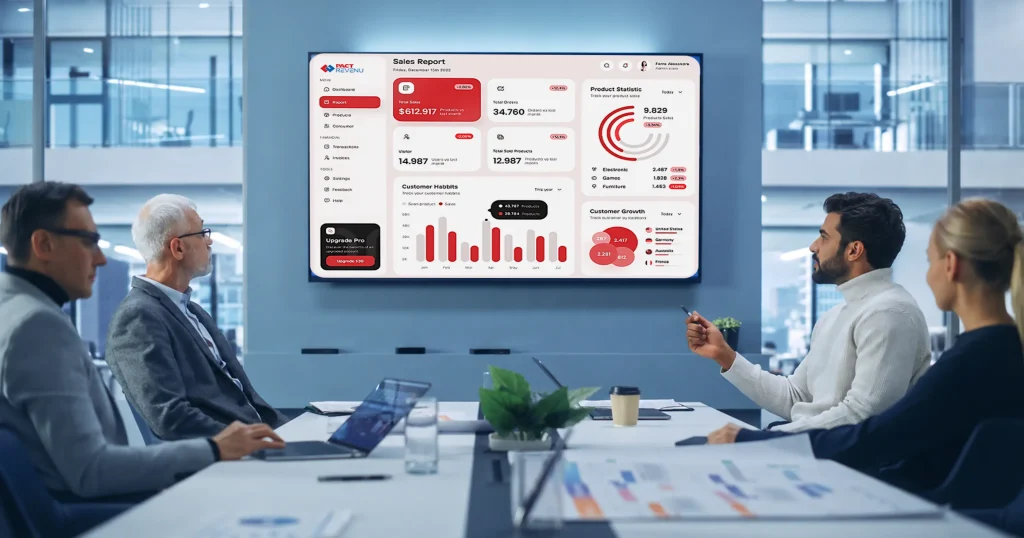
The true future of ERP lies in integration. GCC enterprises are increasingly connecting ERP with CRM (Salesforce), HRMS (QuickHCM), and AI-powered analytics tools to build an end-to-end digital ecosystem.
This unified landscape enables:
- Seamless data exchange between departments.
- Holistic visibility across finance, people, and performance.
- Real-time dashboards for decision-makers.
Such integration transforms ERP from an operational tool into a strategic command center for the enterprise.
Sustainability and ESG Reporting Through ERP
With growing emphasis on sustainability and ESG compliance in the GCC, ERP systems are incorporating modules that help track emissions, waste, and resource utilization.
Future ERP solutions will enable enterprises to measure and report ESG performance alongside financial KPIs — aligning with the region’s drive for responsible and sustainable growth.
Conclusion
The future of ERP in GCC industries is intelligent, localized, and interconnected. As digital transformation accelerates, ERP will serve as the foundation that binds people, processes, and technology into one seamless ecosystem.
At Aramis Solutions, we help businesses across the GCC implement ERP platforms like PACT and SAP that are built for this new era — adaptable, AI-driven, and ready for tomorrow.